



Are your best Thai candidates using your interview process to test the market?
Every hiring manager has a story about the candidate who nailed every round and vanished at offer stage. In Thailand, that pattern is common, quiet, and almost never what it first appears to be.
It happens more than most HR professionals care to admit, and it is particularly difficult to spot because it rarely looks the way you might expect.
In other markets, a candidate benchmarking their value will sometimes say so outright. Here, that kind of directness is unusual. A cultural preference for maintaining harmony means a candidate who never genuinely intended to accept will decline politely, offer a vague reason, and leave you with no real sense that the decision was made long before the offer arrived.
Why some candidates treat your interview process as a free market research tool
For a passive professional, a live process with a credible business serves two purposes. It is the most accurate way to understand what the market will actually pay, and it is a chance to test themselves in a real setting so they are not nervous when a genuine opportunity comes along. If it goes well, a new offer is a bonus. If it does not, they have learned something useful at no real cost to themselves.
The cost lands at the worst possible moment
The frustration hits hardest at offer stage, after other candidates have been released, the role has been off-market for weeks, and stakeholders have aligned, only for someone who performed impressively across every round to decline quickly and without a satisfying explanation.
5 signs your candidate is treating your process as a practice run
Spotting it early and responding well are two sides of the same conversation. Here is what to watch for at each stage and what to do about it.
1. Their questions tell you more than their answers.
If the conversation keeps coming back to compensation, market positioning, and seniority rather than the role or the business itself, present the opportunity with more depth. Share the real context, the team dynamics, and what success looks like day to day. A candidate with a benchmarking agenda can change their mind, but only if there is something worth changing it for.
2. Watch what happens between rounds, not just during them.
If follow-up slows, energy flattens, and the candidate becomes harder to reach between stages, do not wait for the offer stage to address it. Use your check-in touchpoints to have a real conversation about how they are feeling and what questions remain open. In Thailand, framing this as genuine interest rather than a commitment check tends to get a much more honest response.
3. Pay attention when the money conversation starts.
A candidate who becomes evasive or rushes through the compensation conversation is often signalling that the number was never the deciding factor. Have the commercial conversation early, openly, and before the formal offer is sent so you know where the candidate genuinely stands before committing.
4. The decision was made before the offer arrived.
Rather than writing it off, take the time to understand what actually happened. A direct and honest conversation with the candidate about their timing and motivations costs nothing, and someone who was not ready today is often one of the strongest people in your pipeline six months from now.
How to get ahead of it before it reaches you
If you are working with a recruiter, a lot of this groundwork should be happening before a candidate ever reaches your desk. A strong recruiter will already be having the honest conversation about where a candidate genuinely is in their thinking, what it would actually take for them to move, and whether they are truly pursuing this or simply keeping their options open. In Thailand, where that kind of candour requires real trust to happen at all, it is one of the most valuable things a good recruiter brings to your process, and it is entirely reasonable to expect it.
In our experience, around 10 % of candidates who reach final interview stage have some degree of ambivalence about whether they would actually accept an offer. We keep that figure low through thorough screening before a candidate ever reaches a client. That ambivalence exists on a spectrum. For some, it becomes genuine interest as the process develops. For others, the process simply confirms that they are where they want to be, and the withdrawal follows shortly after an offer is made.
— Alexander Grant, Partner - Director of Recruitment Operations, JacksonGrant
If strong candidates are declining at offer stage more often than they should be, the issue is rarely the offer itself. JacksonGrant works with HR teams across industries including manufacturing, logistics and supply chain, life sciences, consumer, and infrastructure, placing candidates across finance, technology, and professional services functions in Thailand and the wider region. The candidates we put forward are the ones we are confident are ready to move.
Career and Hiring Insights
View All InsightsLatest News








What’s new on LinkedIn
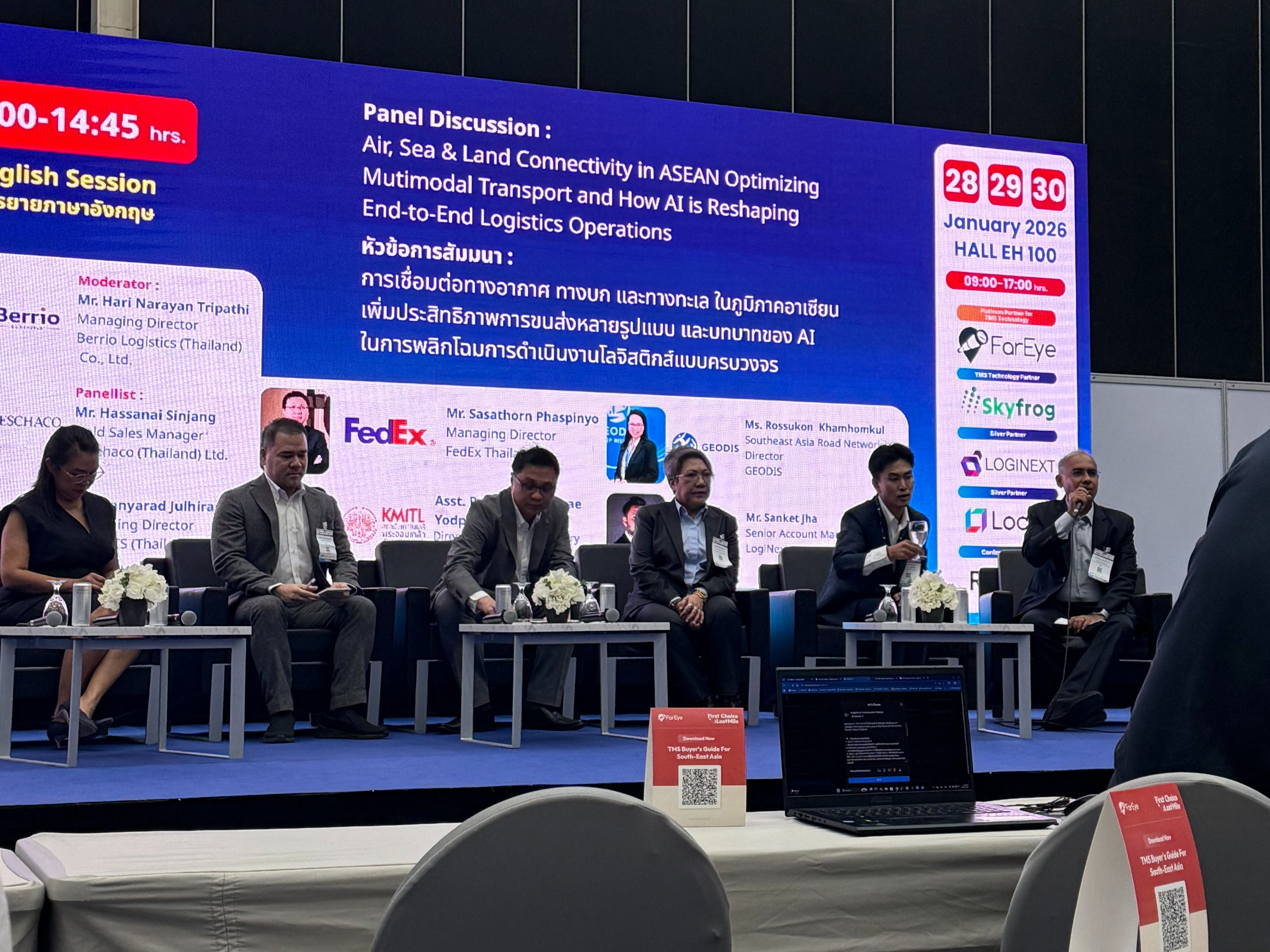
Catching up with the logistics world 🚛✈️
Yesterday, our consultants Brian James and Kanyanut Phongumpai joined the Thai Cargo & Logistics Expo 2026, where industry leaders shared what’s shifting, what’s improving, and what still needs solving across air, sea, and land transport.

These laptops were sitting unused.
Now they’re someone’s access to education. 💻
Last week, we donated 20+ laptops from our office to The Mirror Foundation, turning surplus tech into real learning tools.

A sneak peek at collaboration-in-action with Rhenus Logistics for today's talent video shoot!
Recruitment moves beyond a transaction at JacksonGrant, we act as a true extension of our partners' teams. We’re proud to be on the ground, providing extra hands for our partner's employer branding and storytelling.

